Social media has done something to us. A lot of somethings, but in particular for the point I want to make here, it’s made us value much of what we do online according to ‘engagement’. No matter how much we love doing a thing, we’re always thinking in the backs of our poor embattered brains, ‘if no one else is subscribing, commenting, resharing, or liking this, then what is the point?’
This might be a good way to evaluate, say, a business which needs to move units of widgets, or an entertainment production which has an end goal of selling tickets, but for those of us engaged in our own hobbies online… what’s the use of this metric, like, at all?
It seems to me that when I overvalue engagement, all I manage to do is to talk myself out of my hobbies.
Take knitting for instance. I love to knit. But I don’t claim to be very proficient; and however good I am at it, I’m painfully slow; and for as long as it takes me, my work is full of novice mistakes.
No one is lining up to buy my oddball scarves. All four and a half of them. If I’m lucky, the people I gift them to might drape them on the back of a chair, and if I’m really lucky, they might wear one out in public once or twice.
So what’s the point?
The point is the making.
When I am making a thing, it’s the thing that is making me. Which is just a way of saying that the result only matters so much.
The thing being gained is the skill and the experience, but most of all, the pleasure of the making. I get to buy materials I love. I get to try new techniques and read books about it. I get to watch how-to videos and to appreciate the examples others have made. I get to attend festivals and workshops and demonstrations and lectures about it. I get to take my project with me in a tote bag. I get to customize it. I get to tear it out and try again. I get to daydream about it and take photos of my progress and tell my mom. I get to sympathize with the failures and triumphs of other knitters, understanding their own journey and practice through my own. Learning from both their folly and expertise.
It’s only mildly important to me that someone appreciates or enjoys the end product. The moment it becomes clutter or embarrassment to them, I would love nothing more than for them to excise it from their life and just keep whatever little happiness maybe came from my gift if they even ever liked me in the first place. It’s entirely understandable if they were just being polite and looking for the first chance to offload this ugly excuse for needlecraft.
And to bring this back around to the role playing/ writing crowd— I’ve noticed for myself, and for those around me, that discouragement runs rampant when it’s perceived that few people are reading the posts, or that one of our multimedia projects or articles doesn’t seem to be getting many views or likes or award recognitions. Or, hardest of all, after a period of active involvement and high levels of interest, our game attendance or participation falls. It’s a sign! We think. A sign that we need to do something different. And maybe it is. Or maybe… just hear me out… it isn’t.
This feeling of losing (or never gaining) traction with engagement can lead to ‘the grind’ where product churning becomes even more important to the maker, thinking that quantity is needed to get on the algorithm, or to just become relevant to subscribers, followers, or community. We’ve all seen this in a you tube channel that maybe we followed that began on a kind of innocent interest or authentic spirit, but now they seem to just produce for the sake of producing. You just know that they will burn out or sell out. They lose the plot.
Even if they manage to be producing meaningful and relevant content still, this grind can lead to flooding an easily over-saturated space, particularly in a community like ours where there is more or less a fixed audience. Other people in our simming circles have a scarcity of personal time for watching or reading additional media. Soon it feels like the double time effort to produce results in half as much engagement as you even had before. There are only so many people in our circles, and each of them only has so much bandwidth, and if they’re in the membership of our gaming clubs, chances are they already understandably filled their time with the very writing and playing commitments which were the entire reason they are even members.
What does this mean? Should we give in to the burn out? Hang up our wireless mouses and our recording mics?
I don’t think so.
To know what to do in our online gaming and sim publishing space, I think we have to go back to a time pre internet 2.0…
~~insert wavy retro atmospheric lines here~~
…back to a time when we accepted that our own stuff was not going anywhere else. When our screen names were not linked to any accounts besides our chat, our email, and maybe a geocities page… back before anything had yet to “go viral.” When we created for ourselves. When we did our thing like there was no one watching. When we built our own jumps and the cellphone didn’t exist yet to make a recording of our air time and our wipe outs.
We need to make what we want for the sheer pleasure of making it.
We need to build our field of dreams whether ‘they’re’ coming or not.
So here’s some suggestions:
1) Make posts and additional media at your own pace. Not at the pace of what you suppose is needed for an audience to keep interest. Not totally tied down by a promised release schedule. We’re not getting paid to do this. It’s for FUN. Leverage your own time and creative levels. Sometimes more, sometimes less. Whatever you can do.
2) Make what interests you. Find ways to stay interested and inspired whether that’s pushing through or changing up the plan or the style or the goals. Work through low times without giving up. Follow changes in your interests. Chase white rabbits down trippy rabbit holes. YOLO
3) Develop an archive, portfolio, gallery wall, or some type of creative scrapbook. This is for yourself to reflect on your own work and grow from it as much as it is for the joy of discovery if someone should deep dive into your back posts one day. Compile the stuff you make somewhere. On your harddrive, on a site, in a forum, in a notebook. Be your own archivist.
4) Be both dedicated and flexible. Take your own interests and hobbies both seriously and with a grain of humble salt. Scale up, scale down. Get good at playing or creating solo, duo, or in larger groups: don’t overthink any solo or collab level mode, just leverage the benefits of whichever arrangement the current moment is favoring for you. Availability changes, life happens, the muse abandons us, we wander into other interest areas. People will come, people will go(including yourself sometimes). Only one thing is certain, wherever you go, there you are. You have to figure out how to fly solo at least some of the time as a creator.
5) Find ways to grow through your hobby. Try not to remain static. Push yourself. Experiment a little here and there. Attempt forms you’ve never done. Write or make things you told yourself you can’t. Or things other people implied you are bad at. Your imagined limits are the final frontier of your life. The more you learn from the activity the more you’ll want to do it. But on the other hand…. also go ahead and repeat things you delight in, even if someone calls you repetitive. It’s okay to make what you love. Some obsessions are the key to genius, leading to nuance and revelation. Others are just catharsis, an outlet worth having in life. Maybe even one that helps to get you through a tough spell.
6) Encourage others— and yourself. Notice what efforts others are making and find something to be positive about. Then look at your own stuff and be your own fan in the same way. Be kind to yourself by building a pattern of positivity, good humor, and joy.
7) Use slow times, down times, or frustrating times. Reframe these as opportunities for yourself. What will you need to have in place for the castles in your sky to lift off? Is it research? Developing a skill? Building a resource? Start filling the tanks for liftoff.
8) Whatever. I don’t know why I’m numbering these.
9) You figure it out.
10) Ten is a nice round number, so I hear.
My point? Immediate engagement, interaction, or approval is a crap metric to chase after as a creative in most individual hobbyist cases. It’s a bad way to decide how to invest yourself or what you should enjoy making.
You only need a single algorithm signal to move forward. You.
Silence from the rest of the world doesn’t necessarily mean no one cares. Imagine all of the times you’ve enjoyed something, even been awed at it, and then left no comment. Maybe you were so impressed you didn’t have words. Maybe it was a passing feeling. Maybe you’re just not the kind of person that likes to engage. Maybe it leaves an understated feeling that will come alive with some second inspiration that activates it for that onlooker. Maybe you bookmarked that creator and plan to come back. Maybe you even took notes and considered them a primary inspiration but never told them. Others are like you, on the outside, looking in, too shy or quiet or stubborn to toss you a like.
Heck, an onlooker might hate everything about what you’ve made and that might inspire them to respond re-actively with their own creation. Good on them! Who knows. You don’t know. And you don’t know who hasn’t discovered you yet. Leave your stuff up.
All you do know is that you made it for yourself and you decide what it is you take away from it. Build the jumps and get some hang time. Do it for you. Do it for the sheer love of it. Skin your knees and have another go.
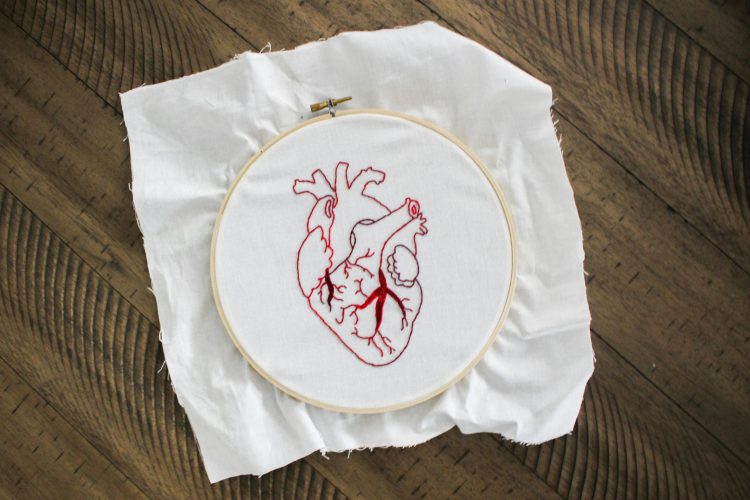
The only heart that matters doesn’t come in the shape of a little affirmation symbol at the end of your post. It’s the heart you put into what you made. Keep going. If you’re making it, then you’re making it.